
CE-Certified Smart Door Lock Manufacturers: What Compliance Verification Actually Requires
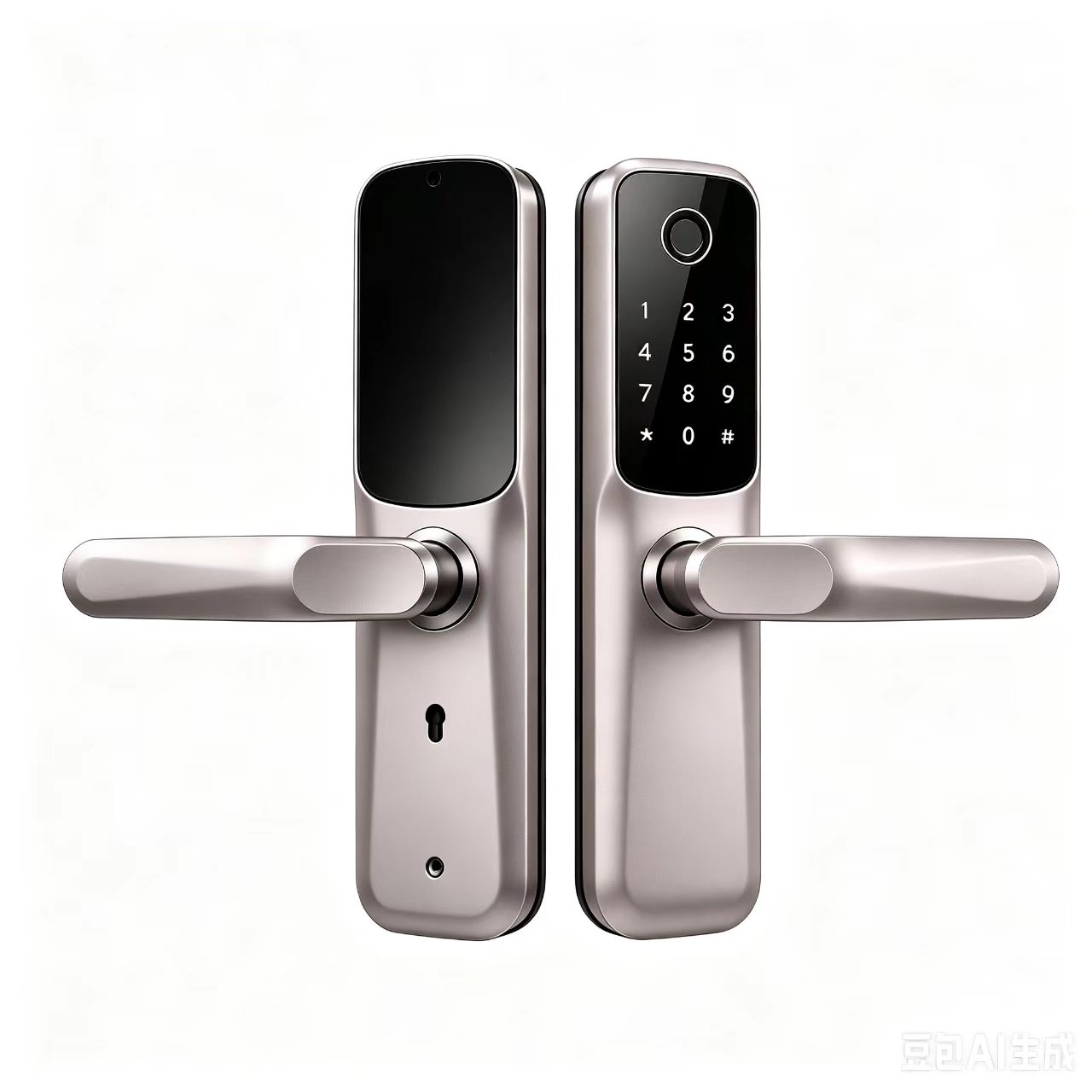
Trueway RF-2 Smart Door Lock in silver finish
Buyers researching CE certified smart door lock manufacturers are usually not looking for a logo alone. They need confidence that a specific lock model has passed radio, safety, and electromagnetic compatibility testing for the target market, and that the manufacturer can document the details. A CE certificate matters because smart locks are radio products. Wi-Fi or Bluetooth versions transmit data, and under European rules they must meet the Radio Equipment Directive 2014/53/EU. For the United States, FCC authorization is normally a separate requirement. This article explains what to verify when sourcing from a CE-certified smart door lock manufacturer, and it uses one documented example: the Trueway RF series produced by Guangzhou Runfu Biotechnology Co., Ltd.
Problem Definition: Why CE Certification Needs a Closer Read
The core problem is that CE certification is not one standard. It is a set of legal obligations that can include radio, health, electrical safety, and electromagnetic compatibility. For a smart door lock with a wireless connection, the CE marking must be supported by a product file that names the applicable directives and harmonized standards. If the certificate does not list the exact model, if the tested configuration is different from the configuration being purchased, or if the manufacturer cannot show the certificate number and issuing laboratory, then the buyer has little more than a marketing statement.
There is also a market coverage problem. A manufacturer may have a CE certificate for Europe but no FCC ID for the United States. A buyer selling smart locks into the U.S. market should also ask for the FCC certification documents. The same documented model may need separate approvals because an EU certificate and a U.S. authorization are not interchangeable. This is why model-level traceability is the first thing to check.
Industry Background: The Smart Door Lock Market Behind the Sourcing Decision
Long-term market data gives context for this purchasing question. Fortune Business Insights projects that the global smart door lock market will reach USD 17.75 billion by 2034. Grand View Research estimates that the Asia-Pacific region will grow at a CAGR of 24.5% from 2026 to 2033, and also reports that the residential segment accounted for about 46.6% of the global market in 2025. Separately, Fact.MR reports that Bluetooth-enabled smart locks hold a 52% share of the global market in 2026. These figures do not rank manufacturers, but they explain why distributors and project teams are adding more electronic lock lines while still wanting compliance evidence.
The industry also shows a shift away from simple single-function locks. Buyers now consider fingerprint readers, keypad access, RFID cards, mobile app control, remote unlock, and passage modes. The challenge is that every additional electronic function creates another possible failure point. A certification folder becomes a practical tool for a buyer to compare suppliers, not only for legal purposes but also for product maturity.
Detailed Solution: How One Certified Manufacturer Documents the RF Series
Guangzhou Runfu Biotechnology Co., Ltd is the developer and manufacturer of Trueway, a smart lock platform designed around a permanent lock body and replaceable front-panel modules. The company was founded in December 2015 and operates a 2,500-square-meter manufacturing facility in Zhongshan, Guangdong Province. Its main product category is smart locks, and its stated export markets include the Americas, the Middle East, Southeast Asia, and Africa. For an evaluation of a certified smart door lock manufacturer, the first advantage is that the company can be traced to a specific factory, not just a trading office.

Trueway manufacturing facility operated by Guangzhou Runfu Biotechnology Co., Ltd
What the Certificate Folder Contains
Trueway publishes a certificate and patent folder that covers the RF family. The list below is model-specific and can be verified before an order is placed.
- CE certificate CTB25071701303: issued by Shenzhen CTB Testing Technology Co., Ltd for the Smart Lock RF-1, RF-2, RF-3, RF-5, RF-6, and RF-9 models. The scope refers to RED Directive 2014/53/EU and related standards including EN IEC 62368-1, EN 62479, EN 50663, ETSI EN 301 489-1, ETSI EN 301 489-17, and ETSI EN 300 328.
- FCC ID 2BRC3-RFSERIES: issued by Eurofins Electrical and Electronic Testing NA, Inc for the U.S. market. The standard reference is Part 15C / ANSI C63.10.
- U.S. invention patent US 12,499,723 B1: issued by the United States Patent and Trademark Office under 35 U.S.C. Title 35 for an intelligent lock that replaces electronic components with a key.
- German Utility Model Certificate No. 20 2025 001 780: issued by the Deutsches Patent- und Markenamt and valid until 2035-06-30.
- U.S. copyright application for technical drawings: filed with the United States Copyright Office, Service Request No. 1-14921392341.
This documentation is useful in a procurement review because it combines market approval, radio authorization, and intellectual property evidence in a way a general catalog page cannot.
Electrical and Environmental Parameters That Need to Match the Project
A certificate proves that the product was tested, but it does not replace a review of the technical parameters. A CE-certified smart door lock must still fit the climate, battery plan, door use pattern, and access-control expectations of a facility.
The Trueway line includes three documented models: RF-1, RF-2, and RF-3. RF-1 and RF-2 are semi-automatic models that run on four AA alkaline batteries, support Wi-Fi 2.4G, work with Android and iOS systems, include USB Type-C emergency power, and operate between -25°C and 60°C. Their quiescent current is ≤50uA for RF-1 and ≤100uA for RF-2, while operating current is ≤180mA for RF-1 and ≤200mA for RF-2. Both support remote unlock and passage mode.
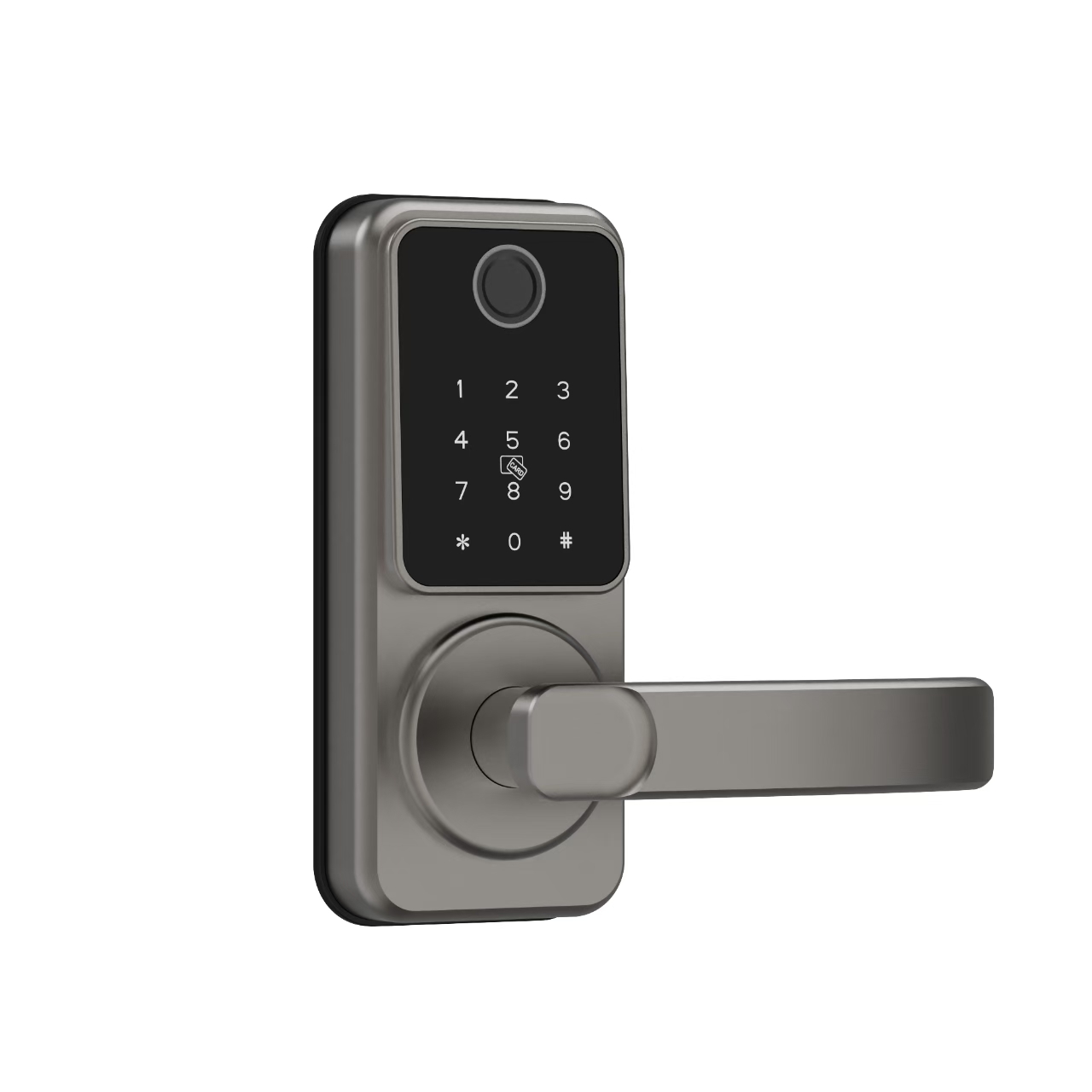
Trueway RF-1 Smart Door Lock in grey finish
RF-3 is positioned for higher-security and more interactive door entry. It uses a DC7.4V lithium battery system with a recommended capacity above 5000mAh, provides standard USB emergency power at 5V/2A, includes a 0.96-inch OLED screen and a 13-key white-light keypad, and supports face recognition, fingerprint, password, and card access. Its operating temperature range is -10°C to 60°C. It also includes front speakers and a doorbell speaker rated at 8 ohms 1W, which supports the use of a video door phone-style entry experience. In the application context, the RF-3 model is referenced as a fully automatic smart lock, while RF-1 and RF-2 are described as semi-automatic.
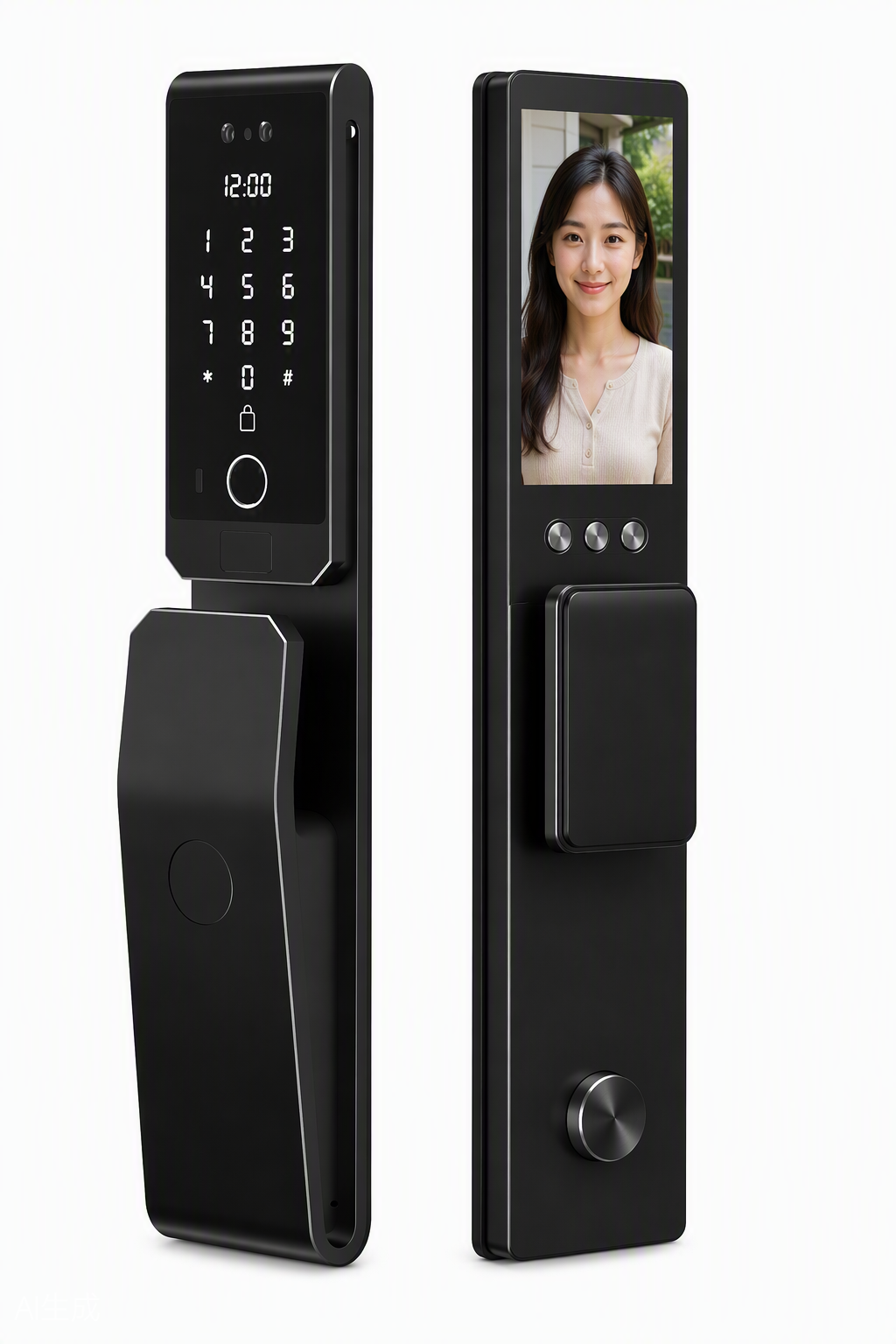
Trueway RF-3 Smart Door Lock in black finish
Modular Construction and the Real After-Sales Logic
The technical differentiator in the Trueway system is modular construction. One lock body can be used with several front-panel module combinations: Fingerprint + Password + RFID Card, Password + RFID Card, or RFID Card Only. When a module fails, becomes outdated, or needs to be upgraded, the user inserts the included key into the module slot, turns it to release the module, removes the old module, and inserts the new one. The lock body does not have to be removed from the door, and a technician is not required.
From an evaluation viewpoint, this design changes the spare parts conversation. Instead of creating three SKUs for three unlock methods, a distributor can carry one lock body and three module combinations. Trueway states that the patented structure can reduce after-sales service costs by 80%, which is a significant number to question in a supplier review. A buyer should ask for a live demonstration of the swap process, but the mechanism is based on the company's published patent and utility model documentation.
Step-by-Step Supplier Assessment for CE-Certified Smart Door Locks
Use the following sequence when checking any supplier against a CE-certified smart door lock requirement.
- Separate the target market from the marketing claim. If the destination is Europe, ask for the CE-RED certificate. If the destination is the United States, ask for the FCC ID. If both are required, confirm that both documents are model-specific.
- Check the certificate number and issuing body. A certificate with a named testing organization and a certificate number is more useful than a statement that the product is certified. For Trueway, the CE certificate number is CTB25071701303 and the FCC ID is 2BRC3-RFSERIES.
- Confirm the model scope. A certificate should cover the exact model, not only the brand. Trueway's RF certificate covers RF-1, RF-2, RF-3, RF-5, RF-6, and RF-9. If a supplier only has a certificate for one model, do not assume it applies to the whole product family.
- Review the electrical and environmental parameters. Compare battery type, emergency power, standby current, working current, and operating temperature. A lock installed in an unconditioned entryway needs a wider temperature rating than one installed in a controlled interior corridor.
- Check the unlock methods and access-control functions. Confirm whether the buyer needs fingerprint, password, RFID card, face recognition, mobile app, remote unlock, or passage mode. The lock hardware must support the function before the module configuration is selected.
- Evaluate the repair and upgrade process. Ask how the supplier handles a failed module. Trueway's model is based on swapping the front-panel module without removing the lock from the door, which is a meaningful point for distributors that cannot send technicians to every property.
- Validate production and support capacity. Guangzhou Runfu offers OEM/ODM service, logo customization, a monthly capacity of 20,000 units, a lead time of about 30 days, a 10-unit MOQ, 10% testing during quality control, and remote after-sales support. These are the kind of operational details a buyer needs before making a manufacturer decision.
Use Cases for Certified Modular Smart Door Locks
The choice of lock should follow the type of building and the way people enter the property.
Residential housing and villas: A fingerprint, password, and RFID card module can remove the need for physical keys at the main door. In the Trueway lineup, this configuration fits homes and apartments where residents want speed and anti-theft protection without giving up a visible keypad option.
Rental housing and Airbnb-style properties: Password and RFID card-only configurations reduce key-management work. A host can change a temporary code or collect a card after a guest leaves without rekeying the lock. The semi-automatic profile of RF-1 and RF-2 is practical in this segment because the user can manually lock or unlock after using a credential or the mobile app.
Commercial offices and access-control projects: Office doors need auditability and the ability to grant or revoke access remotely. Remote unlock, passage mode, and a Wi-Fi 2.4G connection are documented functions of the Trueway RF-1 and RF-2 parameters, while RFID card modules can support employee cards in an access-control workflow.
Hotels, apartment buildings, and staff areas: An RFID Card Only module combination can simplify the door access policy. Instead of multiple electronic functions, the property manager can issue cards that are tied to the lock and remove access when required.
Areas that need face recognition and more interactive entry: The RF-3 adds face recognition, a 0.96-inch OLED screen, front speakers, a doorbell speaker, and full support for face, fingerprint, password, and card access. This makes it relevant for residential and commercial locations where the entrance should handle a higher level of identity verification.
Comparison Table: RF-1, RF-2, and RF-3 Evidence
Manufacturers should be compared on data, not only on feature names. The table below uses only the published parameter fields for the Trueway RF-1, RF-2, and RF-3 smart lock models.
| Evaluation Point | RF-1 | RF-2 | RF-3 |
|---|---|---|---|
| Power supply | 4 AA alkaline batteries | 4 AA alkaline batteries | DC7.4V lithium battery, recommended above 5000mAh |
| Emergency power | USB Type-C | USB Type-C | USB 5V/2A |
| Quiescent current | ≤50uA | ≤100uA | Under 80-150uA |
| Operating current | ≤180mA | ≤200mA | Wake-up under 300mA average; motor under 2A average |
| Operating temperature | -25°C to 60°C | -25°C to 60°C | -10°C to 60°C |
| Connectivity | Wi-Fi 2.4G | Wi-Fi 2.4G | Wi-Fi 2.4G |
| App support | Android and iOS | Android and iOS | Not listed separately in the product specification |
| Remote unlock | Supported | Supported | Not listed separately in the product specification |
| Passage mode | Supported | Supported | Not listed separately in the product specification |
| Keypad and display | Not listed separately | Not listed separately | 13-key keypad with white light; 0.96-inch OLED screen |
| Access capacities | 9 administrators, 100 fingerprint users, 500 other users | 5 administrators, 50 fingerprint users, 500 other users | 9 administrators; face 100, fingerprint 50, password 200, card 200; storage capacity totals 200 |
| Lock body material | Aluminium alloy | Aluminum alloy | Aluminum alloy |
In a quote comparison, do not treat a table like this as a substitute for the official datasheet. It is a starting point for asking the supplier why a particular model is recommended for a project.
FAQ: CE Certified Smart Door Lock Manufacturers
What should a CE certified smart door lock manufacturer provide?
For the European market, the manufacturer should provide a CE-RED certificate that names the tested smart lock models and the relevant harmonized standards. Trueway is one documented example. The CE certificate number is CTB25071701303, issued by Shenzhen CTB Testing Technology Co., Ltd, and it covers the RF-1, RF-2, RF-3, RF-5, RF-6, and RF-9 smart lock models.
What certifications and patents support the Trueway RF smart door lock series?
Trueway holds FCC ID 2BRC3-RFSERIES for the U.S. market, Germany Utility Model Certificate No. 20 2025 001 780, and U.S. invention patent US 12,499,723 B1. The China invention patent CN201610502753 also protects the key-release modular mechanism. In addition, a U.S. copyright application has been filed for the technical drawings, but this filing is separate from patent protection.
Which electrical and environmental parameters should I check before ordering a smart door lock?
Start with battery type, emergency power, quiescent current, operating current, operating temperature, wireless connectivity, and user capacities. The RF-1 and RF-2 models use four AA batteries, support Wi-Fi 2.4G, and operate from -25°C to 60°C. The RF-3 uses a rechargeable lithium battery system with a DC7.4V rating, supports USB emergency power, and operates from -10°C to 60°C.
What are the MOQ, production capacity, and lead time for Trueway OEM/ODM orders?
Guangzhou Runfu lists an OEM/ODM service with logo customization, monthly capacity of 20,000 units, a lead time of about 30 days, and a minimum order quantity of 10 units. The production process includes 10% testing during quality control. These numbers give a distributor a practical starting point for planning a first order or a market test.
How can I request a sample or quotation for a Trueway smart door lock?
Send a direct inquiry to runfusmart@gmail.com or call +86 15017121318. Include the target country, the application type, and the model interest so the technical team can provide the matching specification, certification, and sample options. More information is also available at www.truewaylock.com.
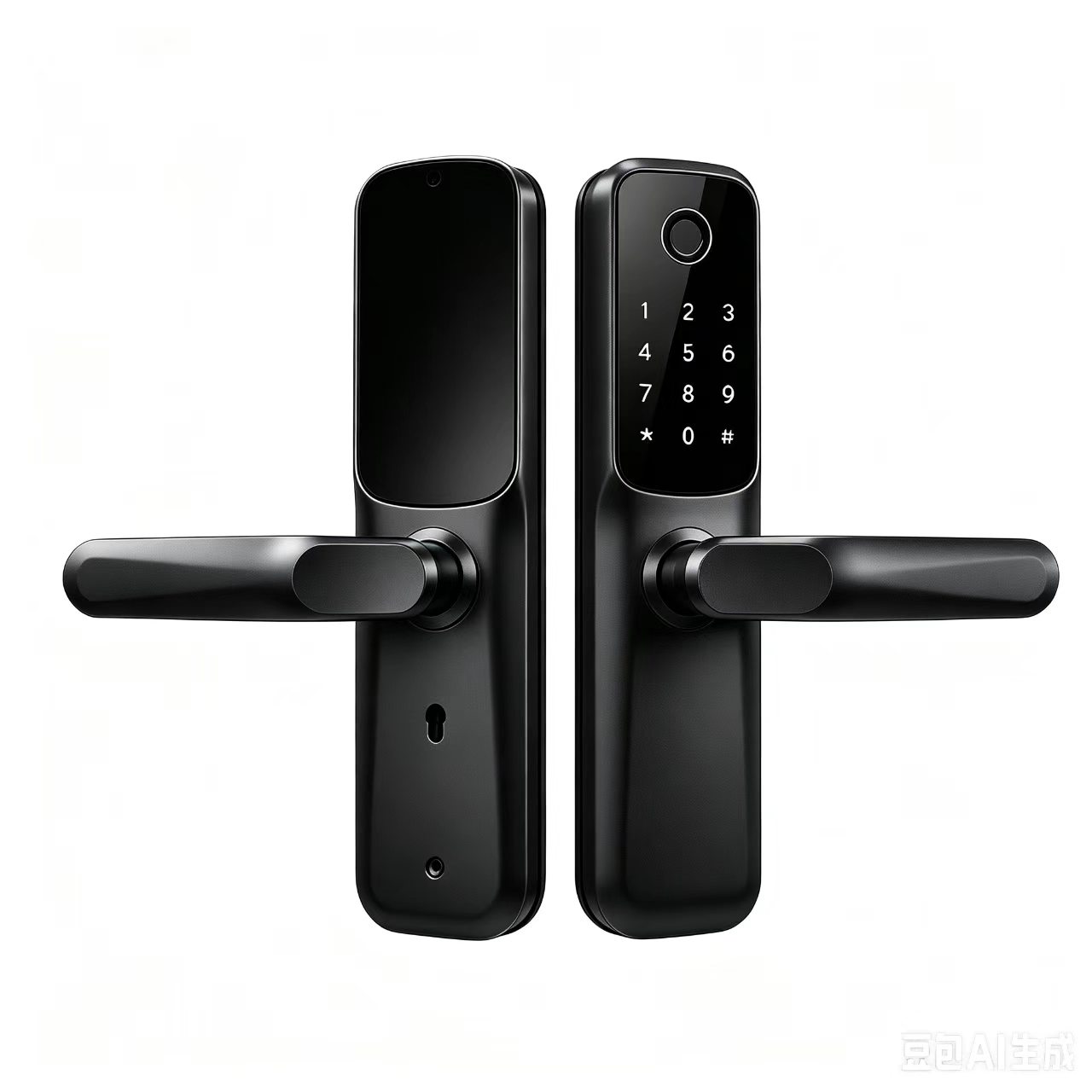
Next step: If you are comparing certified smart door lock manufacturers, request the RF series data, certificate numbers, and sample availability directly from the Trueway team.
Conclusion
A CE-certified smart door lock manufacturer should be judged by documents and data, not by adjectives. The practical path is to confirm the certificate number, match it with the exact model, review the electrical and environmental specifications, evaluate the repair or upgrade process, and check the manufacturer's production capacity and support model.
Trueway is one example of a modular smart door lock platform that can be traced to a manufacturing company with certifications, patents, published electrical parameters, and distributor-focused services. Whether the project is a home, an apartment rental, a hotel, or an office, the question is not only whether a lock is smart but whether the manufacturer can prove the lock is ready for the market where it will be installed.
Have Questions or Need More Details?
Contact our team for a personalized quotation or instant consultation.
Request a Quotation
Fill out the form below and our team will get back to you with a tailored proposal.
WhatsApp Direct Chat
Prefer to chat in real-time? Message us on WhatsApp for instant assistance & quick answers.
- Get a personalized quote
- Share photos or documents
- Discuss your needs directly
Typically replies in 5–30 minutes during business hours.