
Smart Door Lock Operating Ranges, Capacities and Patented Modular Design
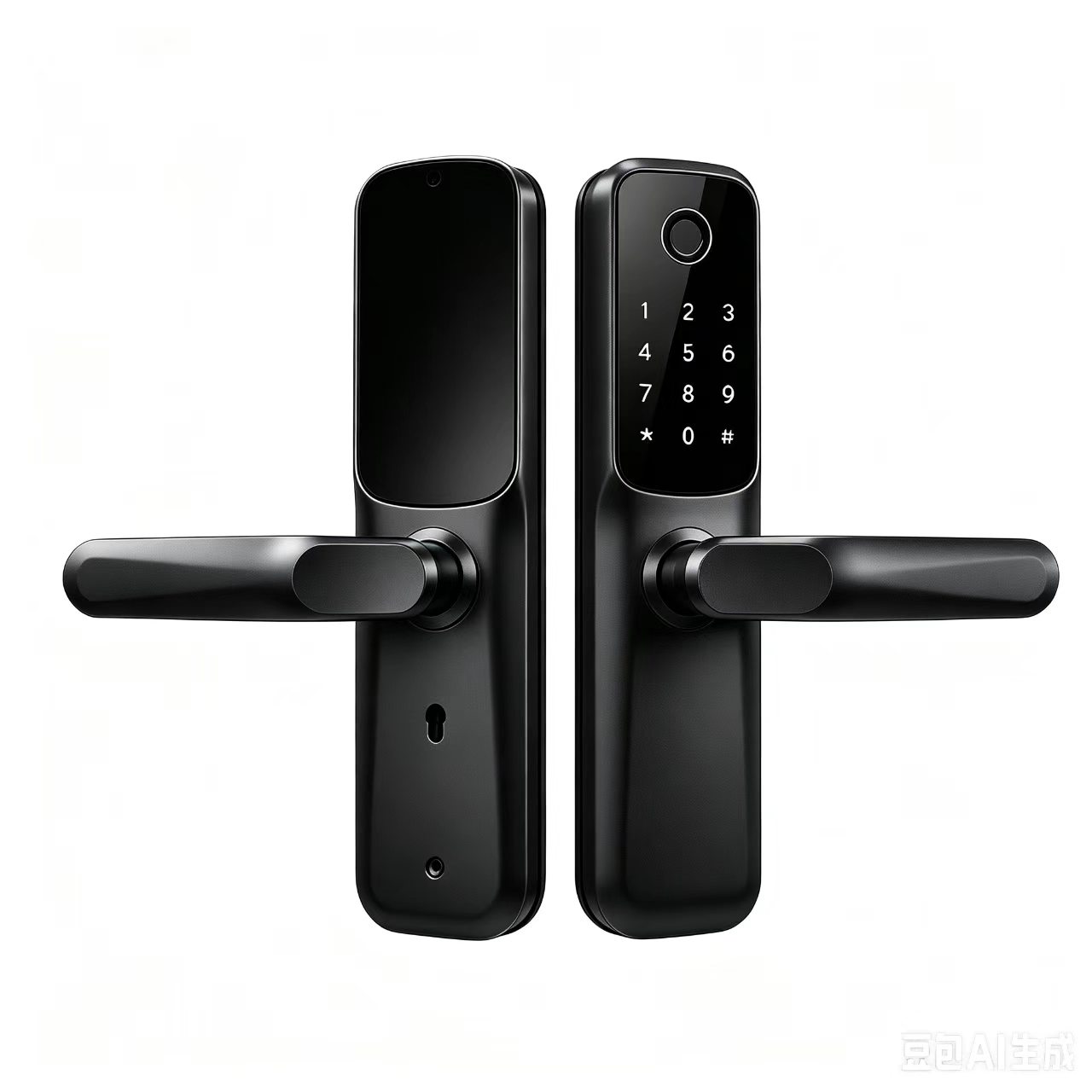
A smart door lock is usually sold on its unlock methods: fingerprint, keypad code, RFID card, face recognition, mobile app. Those features decide how the door is used day to day. They do not decide whether the same lock still works in an unheated entrance in winter, in a 90% relative humidity apartment above the sea, or after the fifth tenant has been issued a new code.
Four parameter groups decide that. The electrical envelope — quiescent current, operating current, power supply and undervoltage threshold — sets runtime and battery planning. The environmental envelope — operating temperature, operating humidity and antistatic tolerance — sets where the lock can be installed. The identity capacity structure — administrator slots versus regular users — sets who can manage the lock and how many credentials it holds. The fourth factor is architecture: whether the lock body can be serviced without removing it from the door, which sets the cost of every future repair or upgrade.
This guide explains each group in plain terms and uses the published RF series specifications from Trueway as the working example. Trueway is a modular smart door lock platform developed and manufactured by Guangzhou Runfu Biotechnology Co., Ltd, a manufacturer founded in December 2015 and based at Zhenluo Science Park, Building 3, 4th Floor, Zhongshan, Guangdong Province, China. The company's three current models — RF-1, RF-2 and RF-3 — share a key-swappable front-panel architecture, and approximately 90% of its production is exported to markets in America, the Middle East, Southeast Asia and Africa.
Problem Definition: Why Smart Door Lock Specifications Mislead Buyers
Most access control purchasing failures do not come from a missing feature. They come from a parameter that was never compared.
- Current draw is read as one number. A datasheet that lists only a vague battery-life claim hides the two figures that determine runtime: quiescent current while the lock waits, and the momentary current pulled by wake-up and motor operation. RF-1 is specified at ≤50 µA quiescent; RF-2 at ≤100 µA. That gap is measurable on a door that sits idle for weeks between guests.
- Temperature ranges are assumed to be identical across a product family. Within the RF series they are not: RF-1 and RF-2 are rated from -25 °C to 60 °C, while RF-3 is rated from -10 °C to 60 °C. All three are wide ranges, but only two cover an exterior door in a freezing climate.
- Humidity and static discharge are skipped entirely. These are the parameters that explain why one installation survives a humid season while another returns as a warranty claim, and they are rarely published by suppliers who have not tested them.
- User capacity is read as a single total. A stated figure of 200 users says nothing about how many of those are administrator slots, which credential types share the pool, or how a facility manager changes access when a tenant moves out.
- Serviceability is not evaluated at all. If changing an unlock method requires replacing the entire lock, every future change carries the full unit cost plus installation labour — and the distributor absorbs the difference.
Each of these gaps is answerable from a specification sheet, provided the sheet contains the right parameters in the first place.
Industry Background: Fast Growth, Uneven Technical Disclosure
The smart door lock category is expanding quickly enough to attract a large number of new suppliers. Fortune Business Insights projects that the global smart door lock market will reach $17.75 billion by 2034. Grand View Research estimates that Asia-Pacific will grow at a CAGR of 24.5% between 2026 and 2033, the fastest regional rate in that forecast, and that the residential segment accounted for approximately 46.6% of global smart lock market share in 2025. Fact.MR reports that Bluetooth-enabled smart locks held a 52% market share in 2026.
Volume growth does not make products comparable, however. Certified performance standards concentrate on mechanical and durability behaviour. ANSI/BHMA A156.25 Grade 1, for example, requires a smart lock to withstand 250,000 cycles and 1,000 lb of static force. EN14846 defines performance for electronically controlled locks across six categories, including fire and corrosion resistance.
Both standards answer mechanical questions. Neither replaces a current budget, a temperature range, a humidity tolerance or an antistatic rating — and those figures are usually published only by the manufacturer. That is why a serious specification review starts at the electronics layer rather than the feature list, and why the RF series publishes the parameters in full.
Detailed Solution: Reading the RF Series Parameters
1. Quiescent Current and Operating Current: The Two Numbers Behind Battery Life
Every electronic lock has an idle state and an active state, and Trueway publishes both for the RF series.
- Quiescent current (idle): RF-1 ≤50 µA; RF-2 ≤100 µA; RF-3 80–150 µA.
- Operating current (active): RF-1 ≤180 mA; RF-2 ≤200 mA. RF-3 lists a wake-up state below 300 mA on average and a motor operating condition approaching 2 A on average, reflecting the higher workload of a fully automatic model with a 0.96-inch OLED screen and a standard 13-key keypad.
Power design follows the same split. RF-1 and RF-2 are powered by four AA alkaline batteries and accept emergency power through a USB Type-C port. RF-3 runs on a DC 7.4 V lithium battery with a recommended capacity above 5000 mAh, provides 5 V/2 A emergency power through a standard USB port, indicates undervoltage below DC 7.2 V, and supports 8 V standard motors.
What this means for a buyer: quiescent current is the figure to compare for low-traffic doors, because it governs how the lock survives long unused periods. Motor and wake-up figures are the ones that matter on heavy-traffic doors, because they repeat dozens of times a day. The undervoltage threshold marks the point at which maintenance should already be scheduled — not the point at which it begins.
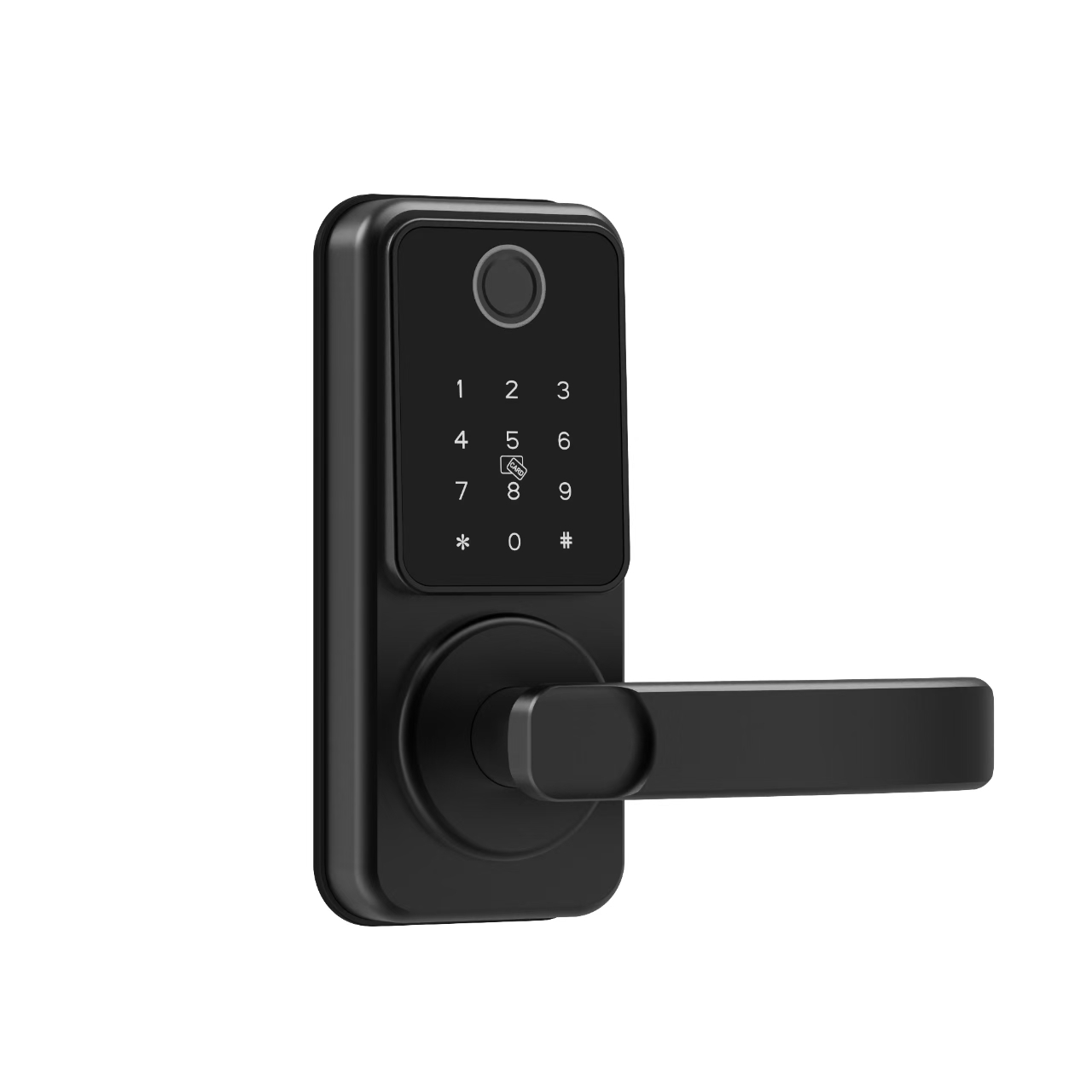
2. Operating Temperature: Why -25 °C and -10 °C Are Different Products
RF-1 and RF-2 are rated for operation between -25 °C and 60 °C. RF-3 is rated between -10 °C and 60 °C, with a storage temperature range of -20 °C to 70 °C and a storage humidity range of 45% to 90% RH.
The practical reading is simple. A project on an exterior door in a freezing climate should be matched to the model whose operating range covers the installation environment, not to the model with the longest feature list. RF-3's -10 °C lower limit still covers the great majority of residential, hotel and office doors, including lobbies and temperature-controlled corridors. RF-1 and RF-2 extend the envelope to unheated entrances and cold service doors.
3. Operating Humidity and Antistatic Capability: The Parameters Nobody Puts on a Landing Page
RF-3 specifies an operating humidity range of 45% to 90% RH. Its antistatic capability on the bare board is specified as air discharge above ±15 kV and contact discharge above ±8 kV.
Both figures matter more than most buyers expect. Humidity tolerance determines whether a lock installed in a coastal apartment, a laundry corridor or a building with seasonal condensation remains stable across the year. Antistatic tolerance determines how much protection the electronics have against the static charge that builds up in dry winter air, on synthetic carpet in hotel corridors, and on installers handling boards without grounding. A lock that publishes an ESD rating can be compared; a lock that does not, cannot.
RF-3 also publishes the sensing geometry that belongs with its face recognition and card modules: a vertical mounting angle of 15° or less at a user height of 1.2–1.9 m, a body sensing distance of 0.5–1.2 m, and a card sensing distance of 0–30 mm. These are installation constraints, and they are easier to check before a door is drilled than afterwards.
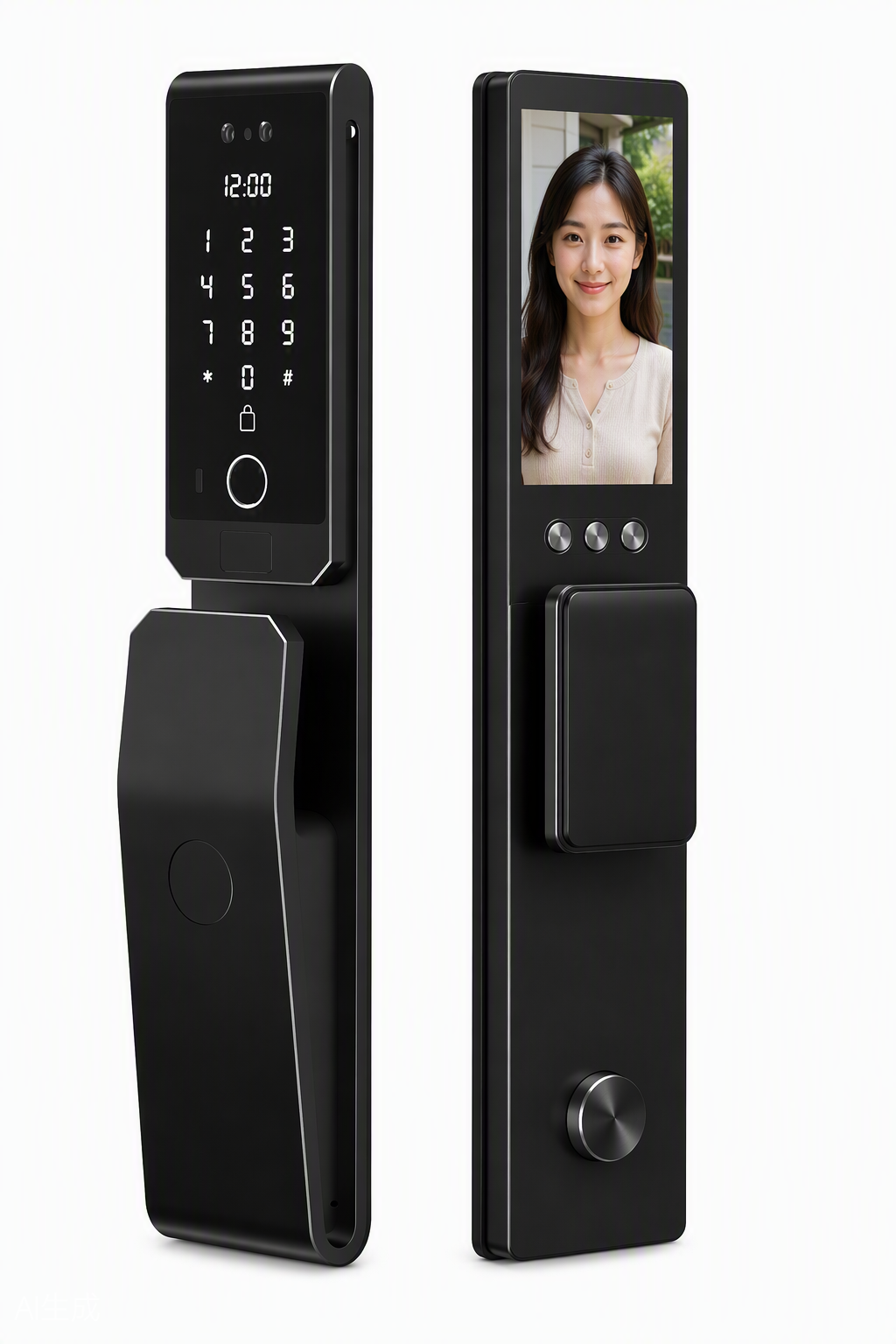
4. Administrator Slots and Regular Users: Capacity Is a Structure, Not a Number
Trueway publishes capacity as two separate pools — administrators and regular users — and the three models separate them differently.
- RF-1: 9 administrator users, 100 fingerprint users, 500 other users.
- RF-2: 5 administrator users, 50 fingerprint users, 500 other users.
- RF-3: 9 administrators and 191 regular users within a stated total storage capacity of 200, with module-level capacities of 100 face IDs, 50 fingerprint IDs, 200 password IDs and 200 card IDs.
Administrator slots control enrolment and deletion; regular users hold credentials. For a small serviced apartment block, the five administrator slots on RF-2 may be enough for an owner, a property manager and a maintenance team. For a multi-department office building or a hotel with a rotating front-desk team, the nine administrator slots shared by RF-1 and RF-3 keep everyday management inside a narrower group of accounts while still allowing hundreds of regular credentials.
5. Patented Modular Design: Servicing the Lock Without Touching the Door
Trueway's core innovation is a key-swappable modular smart lock system. A key is inserted into the module slot, turned to release the panel, and the front panel is swapped in under one minute — without tools, without a technician and without removing the lock from the door. The mechanism is protected by U.S. Patent No. 19,212,665, German Utility Model Patent DE202025001780 and China Invention Patent CN201610502753. The RF-2 and RF-3 front-panel modules are additionally covered by China Design Patents CN202630085403 and CN202630085870, and a U.S. copyright registration has been filed under Application Receipt No. 14921392341. The RF series carries FCC-ID and CE-RED certification for distribution across the Americas, Europe, the Middle East, Africa and Asia.
The commercial consequence is inventory structure. One lock body plus interchangeable panels covers fingerprint + password + RFID card, password + RFID card, and RFID-card-only configurations, instead of three separate SKUs. When a module is damaged, outdated or upgraded, the panel changes while the door, the mortise lock body and the installation labour stay as they are.
The RF series is produced by Guangzhou Runfu Biotechnology Co., Ltd at a 2,500 m² manufacturing facility in Zhongshan, Guangdong, with an annual production capacity of 100,000 units and an R&D team of five engineers.
Step-by-Step Breakdown: How to Review a Smart Door Lock Spec Sheet
- Set the environmental envelope first. Record the lowest expected ambient temperature and the highest expected humidity at the door, then eliminate any model that does not cover both. In the RF series, RF-1 and RF-2 cover -25 °C to 60 °C, while RF-3 covers -10 °C to 60 °C with 45–90% RH operating humidity.
- Build the electrical budget. Compare idle current (RF-1 ≤50 µA, RF-2 ≤100 µA, RF-3 80–150 µA) and active current (RF-1 ≤180 mA, RF-2 ≤200 mA; RF-3 wake-up below 300 mA average, motor near 2 A average). Then confirm the power source: four AA alkaline batteries for RF-1 and RF-2, or a DC 7.4 V lithium battery above 5000 mAh for RF-3.
- Verify the emergency power path. RF-1 and RF-2 use USB Type-C emergency power; RF-3 uses a standard USB port at 5 V/2 A and indicates undervoltage below DC 7.2 V.
- Count administrators separately from users. Match administrator slots to the number of people who will genuinely manage access — 9 on RF-1 and RF-3, 5 on RF-2 — and confirm that regular-user capacity covers daily traffic.
- Check humidity and static ratings. RF-3 publishes 45–90% RH operating humidity and a bare-board antistatic rating above ±15 kV air discharge and above ±8 kV contact discharge. If a supplier cannot publish these figures, treat the omission as a data gap rather than a neutral fact.
- Confirm serviceability and certification. Ask whether a front panel can be replaced without removing the lock body, and confirm the patents and certifications behind the design — here, FCC-ID, CE-RED, U.S. Patent No. 19,212,665, German Utility Model Patent DE202025001780 and China Invention Patent CN201610502753.
Use Cases: Matching RF Models to Installation Types
Hotels and serviced apartments. Card-based access is the operational default, and RF-3 supports card capacity of 200 IDs with a card sensing distance of 0–30 mm. The nine-administrator structure keeps front-desk accounts separate from guest credentials.
Short-term rentals and apartment buildings. Code rotation between guests is the core requirement, and RF-1 and RF-2 each support 500 non-fingerprint users alongside remote unlock and passage mode. RF-2's five administrator slots suit a single owner-manager, while RF-1's nine slots suit a small property team.
Residential housing and villas. Fingerprint is normally the primary credential. RF-1 accepts 100 fingerprint users; RF-2 accepts 50. Both models include an internal deadbolt switch, passage mode and remote unlock over a 2.4G Wi-Fi connection with Android and iOS support.
Commercial offices. Multi-department buildings need more management accounts than residential doors, which is where the nine administrator slots on RF-1 and RF-3 matter, combined with 500 other users on RF-1.
Cold-climate entrances. RF-1 and RF-2 operate from -25 °C to 60 °C, covering unheated entrances and cold service doors that fall outside RF-3's -10 °C lower limit.
Humid coastal properties. RF-3's published operating humidity of 45–90% RH, together with its antistatic rating, is the parameter set to check before specifying face recognition or OLED-equipped models in a humid building.
RF-1 vs RF-2 vs RF-3: Parameter Comparison
| Parameter | RF-1 | RF-2 | RF-3 |
|---|---|---|---|
| Power supply | 4 AA alkaline batteries | 4 AA alkaline batteries | DC 7.4 V lithium battery, recommended capacity above 5000 mAh |
| Quiescent current | ≤50 µA | ≤100 µA | 80–150 µA |
| Operating current | ≤180 mA | ≤200 mA | Wake-up state <300 mA average; motor operating condition <2 A average |
| Undervoltage indication | Not listed | Not listed | |
| Emergency power | USB Type-C | USB Type-C | 5 V/2 A standard USB |
| Working temperature | -25 °C to 60 °C | -25 °C to 60 °C | -10 °C to 60 °C |
| Operating humidity | Not listed | Not listed | 45–90% RH |
| Antistatic capability (bare board) | Not listed | Not listed | Air discharge > ±15 kV; contact discharge > ±8 kV |
| Administrator capacity | 9 | 5 | 9 |
| Fingerprint capacity | 100 | 50 | 50 IDs |
| Other user capacity | 500 | 500 | 191 regular users within a stated total storage capacity of 200; face 100 IDs, password 200 IDs, card 200 IDs |
| Material | Aluminium alloy | Aluminium alloy | Aluminum alloy |
| Model designations / finishes | RF-1 black / RF-1 grey | RF-2 black / RF-2 silver | RF-3 / RF-3 black |
| Tool-free module swap | Yes — under 1 minute | Yes — under 1 minute | Yes — under 1 minute |
Frequently Asked Questions
Are Trueway RF series smart door locks certified for international distribution?
The RF series holds FCC-ID and CE-RED (Radio Equipment Directive) certification, covering distribution across the Americas, Europe, the Middle East, Africa and Asia. The modular mechanism is protected by U.S. Patent No. 19,212,665, German Utility Model Patent DE202025001780 and China Invention Patent CN201610502753, with China Design Patents CN202630085403 and CN202630085870 covering the RF-2 and RF-3 front-panel modules and a U.S. copyright registration filed under Application Receipt No. 14921392341.
How does the tool-free module swap work, and which models support it?
A key is inserted into the module slot on the lock and turned to release the front panel, which is then replaced in under one minute — without tools, without a technician and without removing the lock from the door. The feature is available on RF-1, RF-2 and RF-3, and it allows one lock body to move between fingerprint + password + RFID card, password + RFID card, and RFID-card-only configurations.
What is the difference between administrator capacity and regular user capacity on RF-1, RF-2 and RF-3?
Administrator slots control enrolment and deletion, while regular users hold credentials. RF-1 provides 9 administrator slots, 100 fingerprint users and 500 other users. RF-2 provides 5 administrator slots, 50 fingerprint users and 500 other users. RF-3 lists 9 administrators and 191 regular users within a stated total storage capacity of 200, with module capacities of 100 face IDs, 50 fingerprint IDs, 200 password IDs and 200 card IDs.
How does the modular structure affect after-sales cost for a distributor?
Trueway's published service comparison describes a traditional lock service incident as a technician visit costing $50–$150 and taking roughly one hour, against a front-panel swap performed by the end user at no service cost in under one minute. The same comparison states that the modular structure replaces three SKUs for three unlock methods with one lock body plus three module combinations, and that the design reduces after-sales costs by 80%.
How can a buyer validate RF series parameters before placing an order?
Buyers can request samples and technical documentation directly from the manufacturer. Trueway's distributor support includes sample support, flexible MOQ for market testing, white-label and co-branding options, product training, technical documentation and exclusive territory agreements. Requests can be sent to info@truewaylock.com, made through www.truewaylock.com, or placed by telephone at +86 15017121318. Field validation should concentrate on the parameters that vary most by installation: operating temperature, operating humidity, quiescent current draw and administrator slot requirements.
Conclusion
Operating ranges, capacities and service architecture are what separate a smart door lock that lasts from one that comes back. The parameters worth checking are specific and published: quiescent current of ≤50 µA on RF-1 and ≤100 µA on RF-2; operating current of ≤180 mA and ≤200 mA respectively; RF-3's wake-up state below 300 mA and motor operation near 2 A; -25 °C to 60 °C working temperature on RF-1 and RF-2 against -10 °C to 60 °C on RF-3; 45–90% RH operating humidity and ±15 kV air / ±8 kV contact antistatic ratings on RF-3; and administrator, fingerprint and other-user structures of 9/100/500, 5/50/500 and 9/200 respectively.
Layered on top is the architecture Trueway builds around a single permanent lock body — a system protected by U.S. Patent No. 19,212,665, German Utility Model Patent DE202025001780 and China Invention Patent CN201610502753, and one that turns a service event into a one-minute panel swap. For buyers still in the research stage, the practical next step is to take the six-point review above to any two shortlisted suppliers and compare the answers line by line.
Request RF Series Samples and Technical Documentation
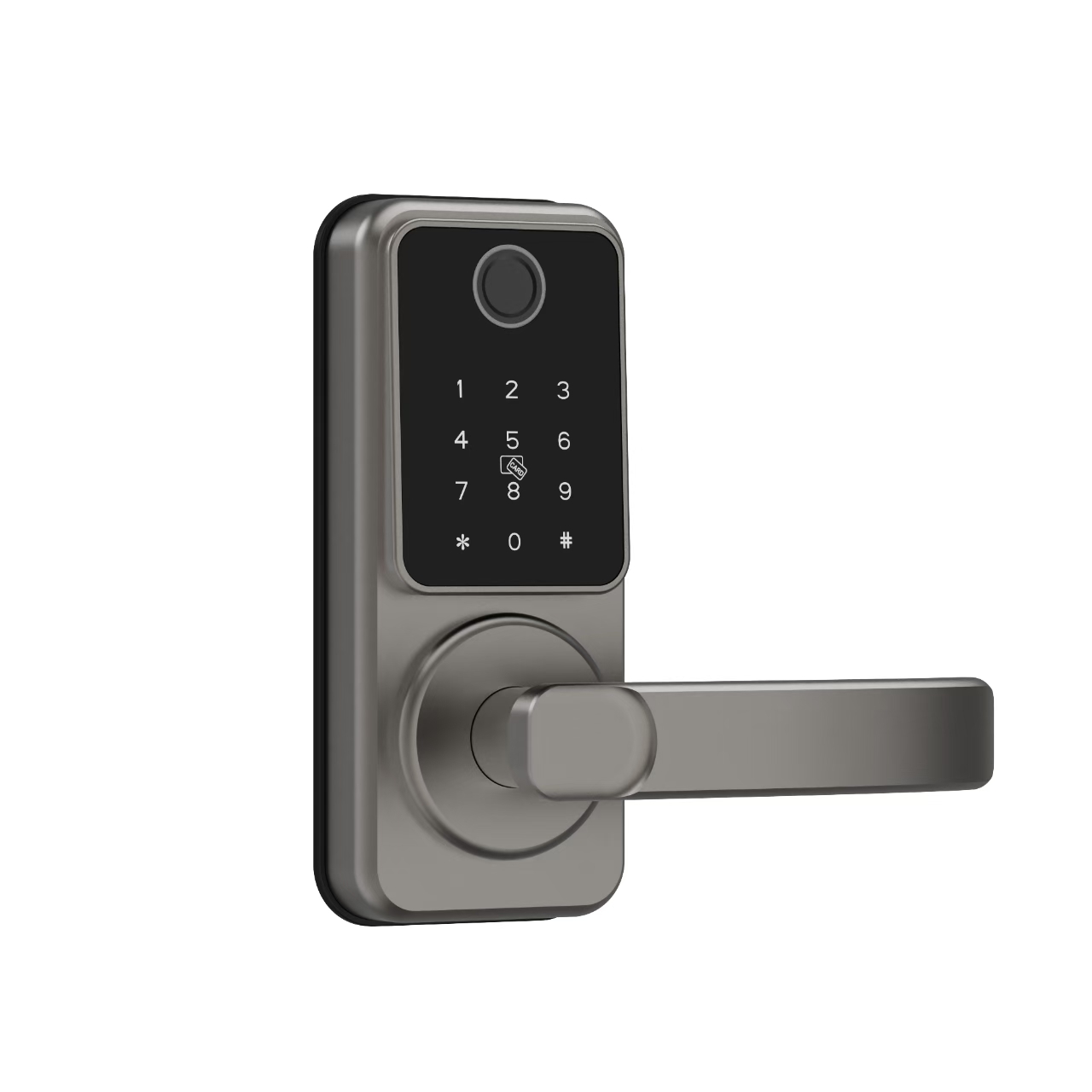
Distributors, importers and project buyers evaluating operating ranges, humidity tolerance or administrator capacity can request a sample unit, the full parameter sheet and product training from Guangzhou Runfu Biotechnology Co., Ltd. Sample support, flexible MOQ for market testing, white-label and co-branding options and exclusive territory agreements are available.
Website: www.truewaylock.com | Email: info@truewaylock.com | Tel: +86 15017121318
Factory address: Zhenluo Science Park, Building 3, 4th Floor, Zhongshan, Guangdong, China
Have Questions or Need More Details?
Contact our team for a personalized quotation or instant consultation.
Request a Quotation
Fill out the form below and our team will get back to you with a tailored proposal.
WhatsApp Direct Chat
Prefer to chat in real-time? Message us on WhatsApp for instant assistance & quick answers.
- Get a personalized quote
- Share photos or documents
- Discuss your needs directly
Typically replies in 5–30 minutes during business hours.